Showing posts with label Malaria. Show all posts

Thursday, March 7, 2013

Close but not close enough


A textile mill in Tanzania that produces long-lasting, insecticide-treated mosquito nets.

I try to keep the figures updated in this class and, in some cases, make sure I'm giving you a good general figure and not one person's estimate. The figures on the costs of malaria eradication would be a good example. As someone pointed out we also need to know the TOTAL worldwide expenditure on malaria control not just the US contribution. I usually just double the US contribution but it looks like 2.5x would be a better figure. The Bill and Melinda Gates Foundation - who I trust to have a pretty good handle on the figures - estimate total worldwide expenditure on malaria control to now be $2 billion per year. This is an impressive increase but still well short of the $5 billion estimated to be required for eradication. The malaria page at the Gates foundation website is well worth a read.

In the past decade, funding for malaria control risen from US$300 million in 2003 to an estimated US$2 billion in 2011. This massive increase was made possible by the Global Fund to Fight AIDS, Tuberculosis and Malaria and commitments from the U.S. President’s Malaria Initiative, the UK Department for International Development, UNITAID, the World Bank, and other bilateral and multilateral agencies.

Still, the Global Malaria Action Plan estimates that an additional US$5 billion in annual funding is needed to achieve and sustain universal coverage and pursue research and development. Our strategy includes investments to encourage continued funding commitments by current major donors, mobilize new donors for malaria R&D, and support efforts to track country-level progress against malaria.

Monday, March 4, 2013

Anti-malaria pinup calendar

The radio show All Things Considered on NPR recently had a segment on How The U.S. Stopped Malaria, One Cartoon At A Time
You can listen to it at the link or read the transcript and see some awesome images.

 (T)he U.S. Army was working hard to eliminate the parasite on military bases and among the troops. They broadcasted anti-malaria jingles on the Armed Forces Radio and distributed cartoons and "pinup calendars" encouraging troops to cover up and use repellent.

Thursday, March 8, 2012

Protect your children

 Disney themed DDT impregnated wallpaper sold in the US in 1947.

Because of evidence of environmental damage DDT was banned in the US in 1972 and was subsequently banned for agricultural use worldwide under the Stockholm Convention. It still has a limited use for vector control but there are some who would like to see this use greatly expanded -

WHO Backs Use of DDT Against Malaria: The World Health Organization today announced a major policy change. It's actively backing the controversial pesticide DDT as a way to control malaria. 
NPR - September 2006


It's an interesting and fairly complex issue. Here's another NPR article from 2009 that addresses the same issue but with a specific program in Uganda. It addresses both the consequences for organic farmers:

 Many farmers feared the DDT could ruin their livelihoods. A lot of farmers here grew organic cotton and sold it -- at a premium -- to the international market. After harvesting, they stored the crops in their homes -- in the very same space where the DDT was to be sprayed.

and how fear of DDT was being used for political gain by others:

Public health experts generally believe that if DDT poses potential health risks, they're far smaller than the known risks posed by malaria. But the Ugandan government didn't paint this nuanced picture of risks verses benefits.
As public concern grew, it wasn't long before politicians stepped into the fray.
"Your President wants to kill you all in broad daylight. I say this because DDT is a highly toxic chemical," said Ken Lukyamuzi.
Lukyamuzi is the charismatic leader of the conservative party -- a small but vocal opposition party in parliament. 

Wednesday, March 7, 2012

Malaria in the US

A fascinating map of malaria in the USA in 1870 from the Library of Congress digital history collection (click here for a zoomable version).

Even though malaria was never a massive problem in the US as a whole it was certainly a problem in parts of the South as this map indicates. The darkest red color indicates a malaria mortality of over 1,400 per 10,000 - ie 1 in 7 people were dying of malaria.

In the US Civil War, where much of the action took place in these malarious states, large numbers of soldiers contracted Malaria and tens of thousands were killed.

The most shocking fact is that in 1870 no-one yet realized that mosquitoes were transmitting the disease.

Here's an excerpt from a Scientific American article entitled The Civil War and Malaria.

THE SCIENTIFIC AMERICAN’S ADVICE TO OUR SOLDIERS--MALARIA AND ITS REMEDIES
It is difficult for us to realize the fact, but we all know that any soldier is in five times more danger of dying from malarious disease than of being killed in battle.

WHERE MALARIA EXISTS
What malaria is nobody knows. It may consist of organisms, either animal or vegetable, too minute for even the microscope to detect or it may be some condition of the atmosphere in relation to electricity, or temperature, or moisture; or it may be a gas evolved in the decay of vegetable matter. The last is the most common hypothesis, but it is by no means proved, and it has some stubborn facts against it. There is no doubt, however, that malaria is some mysterious poison in the atmosphere, and that it is confined strictly to certain localities.

Tuesday, March 6, 2012

Global Malaria burden

Here's an article from the Guardian newspaper about some recent revisions to the number of people estimated to die from malaria each year.

Malaria deaths country by country: how many are there?
What we thought we knew about Malaria deaths is wrong: the reality is much, much worse. See what the new detailed data says.
Whilst the good news is that the current estamted total number of deaths is still down from a high of nearly 2 million people per year, the bad news is that it nearly doubles some other estimated figures. The discrepancy largely comes about from a difference in adult deaths.

Monday, March 5, 2012

Malaria proof mosquitoes

A 'malaria proof' mosquito' would be an valuable tool in the fight against malaria. It looks like scientists have created just such a mosquito - through a combination of disrupting the parasite development and reducing the mosquitoes lifesapn (as we discussed in class). Now all we need is a way to give such mosquitoes a competitive edge so that they replace the
 native mosquitoes...


It was known that the Akt enzyme is involved in the mosquito's growth rate and immune response, among other things," Riehle said. "So we went ahead with this genetic construct to see if we can ramp up Akt function and help the insects' immune system fight off the malaria parasite."
The second rationale behind this approach was to use Akt signaling to stunt the mosquitoes' growth and cut down on its lifespan.
"In the wild, a mosquito lives for an average of two weeks," Riehle explained. "Only the oldest mosquitoes are able to transmit the parasite. If we can reduce the lifespan of the mosquitoes, we can reduce the number of infections."

Tuesday, July 19, 2011

Attractiveness of humans to mosquitoes

There were a couple of questions on this paper, Malaria Infection Increases Attractiveness of Humans to Mosquitoes, that I wanted to check up on, and like I said, the answer is usually more complicated and more interesting than expected.

First, children infected with malaria but NOT producing gametocytes were no more attractive to mosquitoes than uninfected children. Not even slightly. The data points are practically on top of one another.

BUT, what I hadn't realized was that when they treated the children the ones that had been infected with gametocytes were then LESS attractive to mosquitoes. Strange.

A striking aspect of our results is that former gametocyte carriers (i.e., after treatment) seem to repel mosquitoes, as only 22%, i.e., less than one third, of the responding mosquitoes prefer these children (t-test: t = −2.203, df = 11, p = 0.050; Wilcoxon signed-rank test: p = 0.040). An explanation for this result could be based on the slight anaemia in previously infected children. Mosquitoes might sense this anaemia and prefer those children with a higher concentration of red blood cells as it is these that the mosquitoes require. This would indicate a remarkable adaptation by the mosquitoes. The interpretation, however, would predict that the children previously infected with the asexual stage should also repel mosquitoes—but this was not observed.

Thursday, March 3, 2011

Are bednets the solution?


Not everyone agrees that bednets should be the main focus of our malaria eradication campaign. This video raises a number of very good points, particularly that the western world eliminated malaria via the use of DDT, a tool we now deny to other countries.

For further reading on the issue of using pesticides such as DDT check out Tina Rosenberg's controversial article in the New York Times: What the world needs now is DDT.

Also, it is interesting to note that even Rachel Carson, whose book Silent Spring sounded the alarm on the environmental dangers of DDT, did not call for a total ban on DDT:

Practical advice should be "Spray as little as you possibly can" rather than "Spray to the limit of your capacity."

Unfortunately because we did the latter we eventually saw environmental consequences and ultimately banned DDT, but only after we had eliminated malaria. Is it right to deny this tool to other countries, even its appropriate use, because we screwed up?

Wednesday, March 2, 2011

Malaria & Malnutrition

Young children are more likely to fall victim to food shortages and thereby malnutrition, which increases their susceptibility to infectious disease, including an increase in mortality due to malaria. Severely malnourished children with a malarial infection may have no fever and show few or none of the classic signs of the disease, making it much more difficult to diagnosis & treat effectively. The World Health Organization suggests that all malnourished children in regions where malaria is endemic be screened proactively for malaria weekly even when they show no symptoms.

Monday, February 28, 2011

Malaria Proof Mosquitoes

Time magazine recently named the development of that have been genetically modified to resist malaria as one of the 50 best inventions of 2010 and gave it the No. 1 spot in the health-and-medicine category.

Now the goal is to make the altered mosquitoes hardier than native varieties, which they could someday supplant in nature throughout the world.

"Our hope is to release them and drive the gene through the population," said professor Shirley Luckhart, a leader in the joint effort between scientists at UC Davis and the University of Arizona.

From an article last week, Researchers work to create malaria-proof mosquitoes, in The Republic Newspaper.

An alternative approach that I very briefly mentioned in class is to use knockout genes to drive certain mosquito species to extinction. This approach was described by Olivia Judson in a New York Times Op-Ed piece in 2003: A Bug's Death.

There's no shortage of ideas. So why are so many people still suffering from malaria and why do so many children die?


Sunday, February 27, 2011

Transgenic fungi combat malaria

A day early for our malaria week, but too topical not to mention, is this report today on ScienceDaily about the use of transgenic fungi to combat malaria and other diseases. The ScienceDaily report is based on a paper out in the journal Science this week: Development of Transgenic Fungi That Kill Human Malaria Parasites in Mosquitoes.

New findings by a University of Maryland-led team of scientists indicate that a genetically engineered fungus carrying genes for a human anti-malarial antibody or a scorpion anti-malarial toxin could be a highly effective, specific and environmentally friendly tool for combating malaria, at a time when the effectiveness of current pesticides against malaria mosquitoes is declining.

The research team found that compared to the other treatments, spraying mosquitoes with the transgenic fungus significantly reduced parasite development. The malaria-causing parasite P. falciparum was found in the salivary glands of just 25 percent of the mosquitoes sprayed with the transgenic fungi, compared to 87 percent of those sprayed with the wild-type strain of the fungus and to 94 percent of those that were not sprayed. Even in the 25 percent of mosquitoes that still had parasites after being sprayed with the transgenic fungi, parasite numbers were reduced by over 95 percent compared to the mosquitoes sprayed with the wild-type fungus.

Saturday, July 17, 2010

Malaria-proof mosquito engineered

Researchers engineer malaria-proof mosquitoes.
July 17, 2010


Malaria kills nearly 1 million people a year, but it has a weakness — to infect humans, it needs mosquitoes. In a potential step toward eradicating the disease, researchers report that they have developed a genetically engineered breed of mosquito that cannot be infected by the malaria-causing parasite.

Genetically-modified mosquitoes are far from ready for use in the field, but the researchers achieved an unprecedented 100% blockage of the Plasmodium parasite, highlighting the promise of this approach, according to their study.

The actual research paper is in PLoS Pathogens: Activation of Akt Signaling Reduces the Prevalence and Intensity of Malaria Parasite Infection and Lifespan in Anopheles stephensi
Mosquitoes

Thursday, March 4, 2010

Private Snafu vs. Malaria Mike


A US-army sponsored instructional film aimed at military personnel.Produced by the US Army Signal Corps and distributed by Warner Bros Pictures. Although none of the key production personnel are credited onscreen there are some famous characters associated with this short film. If Snafu sounds like Bugs Bunny that's because he IS Bugs Bunny, well, Bug Bunny's voice - Mel Blanc (check out the sound he makes when he tosses the repellent away). Also, the supervising producer was Theodore Geisel - better known as Dr Seuss.

I'm not going to mention the frequent depiction of naked buttocks in this army sponsored film....

Wednesday, March 3, 2010

Panama Canal and Malaria

As Professor Latto explained in class, the Panama Isthmus was the ideal breeding habitat for malaria carrying mosquitoes: no dramatic seasonal changes, the rainy season last ¾ of the year, and most of the area was rural jungle. 1/6 of the 80,000 people that lived in the region before the canal was built were infected with malaria. When it was decided that the canal would be constructed, the US army intervened to prevent workers from becoming infected with malaria by following seven crucial rules:

1. Drainage: all standing water within 100 yards of the construction site was drained

2. Brush and grass cutting: all grasses were kept at a height of less than 1 foot

3. Oiling: when drainage was not possible, oil was added to kill mosquito larvae

4. Larviciding: when oiling was not sufficient, they used larviciding

5. Prophylactic quinine: provided without charge to all workers and ½ of the workers took a dose each day

6. Screening: all government building were to be screened against mosquitoes

7. Adult killing: mosquitoes generally stay within the same room after they are done feeding and workers collected them

By following these seven rules, yellow fever was eradicated and cases of malaria dramatically declined in the Panama Isthmus. Click here to read more about eradicating malaria in the Panama Isthmus

Malaria Action Plan

"I believe that if you show people a problem, and then you show them the solution, they will be moved to act. The Global Malaria Action Plan lays out an achievable blueprint for fighting malaria – now it's time for the world to take action." Bill Gates, Co-Chair, Bill & Melinda Gates Foundation

The Roll Back Malaria (RB M) Partnership has developed the Global Malaria Action Plan (GMAP) to provide a global framework for action around which partners can coordinate their efforts. It consolidates the collective input of 30 endemic countries and regions, 65 international institutions and 250 experts from a wide range of fields.

The GMAP outlines the RBM Partnership’s vision for a substantial and sustained reduction in the burden of malaria in the near and mid-term, and the eventual global eradication of malaria in the long term, when new tools make eradication possible.

You can further information at the RBM website including a lot of information on the Global Malaria action Plan and some interesting videos.

Monday, March 1, 2010

A Bug's Death

A bacterial strain of Wolbachia has been adapted to infect the mosquito vector that transmits dengue virus to humans. The bacterial infections (red) are only transmitted through females to offspring, and cut mosquito life span by up to 50%. This may block disease transmission to humans.

One way to shorten mosquito lifespans is to infect them with the bacterium, Wolbachia. In the laboratory, infection with this bacterium halved the lifespan of the insects, potentially reducing the spread of diseases like Dengue fever and Malaria that must incubate in the mosquitoes for two weeks or so.

This is relatively recent work and was reported in the journal Science at the start of last year: Stable Introduction of a Life-Shortening Wolbachia Infection into the Mosquito Aedes aegypti. There is also an editorial summary: Mosquitoes cut short.

For a different approach, and some interesting ethical questions, consider Olivia Judson's article
A Bug's Death in the New York Times.

Tuesday, September 1, 2009

National Geographic

In July 2007 National Geographic had an feature article about Malaria. This is available for free at their website and there's also a video, field notes from the writer and photographer and a gallery of the usual amazingly high quality National Geographic photographs.

Summer re-runs - part 7

One survey asked rural Africans what they would buy if they had the money. A bed net was sixth on the list. The first three items were a radio, a bicycle and, heartbreakingly, a plastic bucket.

Some Malaria postings that are well worth a read. I think everybody should read the articles in the first link. Much food for thought.
and, for fun, the Star Wars mosquito Defense System

Monday, August 31, 2009

DDT - or not...

'The U.S. and WHO encourage African countries to use DDT to fight the spread of malaria, but some Ugandans are protesting. The pesticide DDT, long banned in the United States, has made something of a comeback in Africa. DDT can be an effective weapon against malaria. The U.S. government, and the World Health Organization are encouraging African countries to use the insecticide, and say it is safe when handled properly. But in the East African nation of Uganda, DDT has provoked a fierce political battle. And the experience has taught a hard lesson: effective malaria control involves more than just fighting mosquitos.'

Read the rest of the story here on Public Radio International. It's interesting and maybe not what you expect.

Alex Fokkens is a Dutch organic cotton buyer. He's worried the spraying would mean he'd no longer be able to sell the cotton to his European customers, "If they find out there are any traces of DDT, it would be sent back, and it would be a very big claim on us."

So proponents of organic agriculture mounted a vocal campaign to thwart the government's DDT plan.

Monday, August 3, 2009

Topical

Even for a topical subject there were a surprising number of disease stories in the news today.

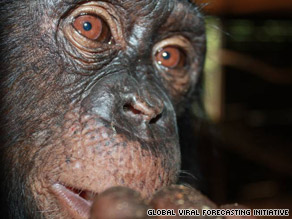
Briefly the lead item on the CNN home page was a report on a PNAS paper abut the origin of Malaria:

Today scientists reported that they have discovered the origin of malaria, one of the deadliest diseases of humanity. Chimpanzees, native to equatorial Africa, have been identified as the original source of the parasite that likely moved from them to humans via mosquitoes.

Also in the news today was a story based on a Nature Medicine paper this week that describes a new strain of HIV:

These findings indicate that gorillas, in addition to chimpanzees, are likely sources of HIV. The discovery of this novel HIV lineage highlights the need to better monitor the emergence of new HIV variants, particularly in western central Africa from where existing HIV groups have originated.

Finally, the cholera outbreak in Zimbabwe I mentioned has finally been declared over:

Zimbabwe's Health Minister yesterday said a cholera epidemic has ended, after more than 4200 deaths and 100 000 cases since last August, but gave warning new outbreaks remain a threat.

"The nation experienced the worst cholera outbreak between August 2008 and June 2009, but the epidemic has successfully been contained and has ended," Health Minister Henry Madzorera said.

International aid organisations said the cholera epidemic was the worst to hit Africa in 15 years and gave warning the disease had now entrenched itself as endemic in Zimbabwe.