Showing posts with label Lyme disease. Show all posts

Sunday, January 27, 2013

Lizard loss

If lizards are so important in keeping California relatively Lyme disease free then what would happen if we were to lose the lizards from an area? This is the sort of thing that might happen with a dramatic change in habitat.

Well this has been tested experimentally and the results are a little surprising.

“Our expectation going into this study was that removing the lizards would increase the risk of Lyme disease, so we were surprised by these findings,” said study lead author Andrea Swei, who conducted the study while she was a Ph.D. student in integrative biology at UC Berkeley. “Our experiment found that the net result of lizard removal was a decrease in the density of infected ticks, and therefore decreased Lyme disease risk to humans.”
...

The researchers found that in plots where the lizards had been removed, ticks turned to the female woodrat as their next favorite host. On average, each female woodrat got an extra five ticks for company when the lizards disappeared.

However, the researchers found that 95 percent of the ticks that no longer had lizard blood to feast on failed to latch on to another host.

“One of the goals of our study is to tease apart the role these lizards play in Lyme disease ecology,” said Swei, who is now a post-doctoral associate at the Cary Institute of Ecosystem Studies in New York. “It was assumed that these lizards played an important role in reducing Lyme disease risk. Our study shows that it’s more complicated than that.”

Notwithstanding the results in this new study, Lane pointed out that the Western fence lizard are key to keeping infection rates down among adult ticks. “This study focused only on the risk from juvenile ticks, specifically those in the nymphal stage,” he said. “The earlier finding that adult ticks have lower infection rates because they feed predominantly on the Western fence lizard at the nymphal stage still holds.”

For more information check out this press release from UC Berkeley: Tick population plummets in absence of lizard hosts or the original article here: Impact of the experimental removal of lizards on Lyme disease risk.

Friday, January 25, 2013

A tale of two Romneys

You can read more about America's rioting cities of the 1960's at PBS's American Experience website for 'Eyes on the Prize - America's civil right's movement 1954-1985'.

For five days in July, Detroit, Michigan descends into chaos. An economic boom has created jobs, and urban renewal projects have built new infrastructure, but blacks have been left behind. New expressways destroy black neighborhoods, and economic opportunities are scarce for black residents. The 95% white police force, notorious for brutal and arbitrary treatment of black citizens, raids an illegal after hours club and draws an angry, frustrated crowd that quickly turns hostile.

As Sunday July 23rd dawns, the growing crowd is looting and burning the city. Twelve hours into the frenzy, Governor George Romney calls in the Michigan National Guard; unprepared troops make mistakes like shooting out the street lights. Nearly 4000 people will be arrested in the first two days, and over 7000 by the third. Most are young and black. Police and guardsmen shoot at will, with some later insisting that all of their victims were armed.

Romney asks President Lyndon Johnson for federal help and by Monday afternoon 4700 U.S. Army paratroopers have arrived, under orders not to use live ammunition. A combined 17,000 law enforcement troops suppress the riot. After five days of anarchy, more than 40 people are dead, hundreds are injured, and damage estimates hit $50 million.

Yup, this is Governor George Romney, father of Mitt, and a leading Republican contender to challenge Lyndon Johnson for the presidency the following year. Romney believed the White House had intentionally slowed its response to the riots and he accused Johnson with having "played politics" in his actions. George Romney went on to lose to Richard Nixon in the Republican primary after running a poor campaign.

"Watching George Romney run for the presidency was like watching a duck try to make love to a football." Governor Jim Rhodes of Ohio

Over four decades later and it's Mitt's turn. Over those four decades the exodus from America's cities to the suburbs has played an unknown role in the rise of Lyme disease. A new political tool that has arisen is 'micro-targeting' allowing you to target each voter with the issues that are important to them.

The Romney-Ryan campaign 2012 goes with Lyme Disease in Virginia. The front of their mailer contains the rather general Romney-Ryan. Doing more to fight the spread of Lyme disease. Improve synergy. Increase awareness. Support treatment.

But the back explains just what this means.

It almost sounds reasonable until you ask yourself why a doctor would need protection from lawsuits...

Soundtrack for this post: Motor City is Burning by the MC5


Thursday, January 24, 2013

Chronic Lyme

People will probably interpret this study in a way that fits their favorite theory but on the face of it this paper from a couple of months ago in the New England Journal of Medicine argues against persistent Lyme disease infection being the cause of chronic Lyme disease.

Differentiation of Reinfection from Relapse in Recurrent Lyme Disease
None of the 22 paired consecutive episodes of erythema migrans were associated with the same strain of B. burgdorferi on culture. Our data show that repeat episodes of erythema migrans in appropriately treated patients were due to reinfection and not relapse. 

An editorial in the same issue states the implications quite explicitly:
The issue of relapse versus reinfection has a broader context because of patient-advocacy groups that promote months or years of antibiotic therapy for “chronic Lyme disease.” Moreover, chronic Lyme disease has become a common diagnosis for medically unexplained pain or neurocognitive or fatigue symptoms, even when there is little or no evidence of previous B. burgdorferi infection. Even so, these patients are said to have persistent infection, which can be suppressed only with months or years of antibiotic therapy, and the therapy must be restarted when symptoms recur. As concluded by the Infectious Diseases Society of America, there is no evidence of persistent B. burgdorferi infection in human patients after recommended courses of antibiotic therapy. Although B. burgdorferi infection may persist for years in untreated patients, the weight of evidence is strongly against persistent infection as the explanation for persistent symptoms in antibiotic-treated patients with Lyme disease.

Here's a report on the paper from the New York Times: New Infection, Not Relapse, Brings Back Lyme Symptoms, Study Says

(A) new study finds that repeat symptoms are from new infections, not from relapses.

The results challenge the notion, strongly held by some patients and advocacy groups, that Lyme disease, a bacterial infection, has a tendency to resist the usual antibiotic treatment and turn into a chronic illness that requires months or even years of antibiotic therapy.

Wednesday, January 23, 2013

New Borrelia on the block

From the LA Times last week:
New Lyme disease-like infection is on the map in U.S.


There a new tick-transmitted spirochete in town, and this wily relative of the organism that causes Lyme disease is probably sickening more than 4,300 Americans a year with relapsing fevers and flu-like symptoms, according to a new report. The good news: A round of common antibiotics appears capable of vanquishing the newly discovered threat.

The organism, called Borrelia miyamotoi, was discovered in 1995 in Japan, but it was not until 2011 that disease hunters found and described evidence that it was making people sick in Central Russia. The organism was found in deer ticks in Connecticut in 2001 and in Northern California in 2006. So it was only a matter of time before the illness it causes was detected in American patients.

That time has come. The New England Journal of Medicine on Thursday published two reports documenting its arrival on U.S. shores. One is a case study of a confused and unsteady elderly woman stricken by Borrelia miyamotoi; the other reports on a broad sampling of blood from patients in New England, where Lyme disease is widespread, and suggests that Borrelia miyamotoi infection "may be prevalent in areas where Lyme disease is endemic in the United States."

The NEJM papers are:
Meningoencephalitis from Borrelia miyamotoi in an Immunocompromised Patient
We report a case of progressive mental deterioration in an older, immunocompromised patient, and even though Koch's postulates were not met, we posit B. miyamotoi as the cause, owing to its direct detection in cerebrospinal fluid (CSF) with the use of microscopy and a polymerase-chain-reaction (PCR) assay.
and
Human Borrelia miyamotoi Infection in the United States
The identification of B. miyamotoi antibody in 18 of our study patients, including seroconversion associated with symptoms in 3 patients, suggests that B. miyamotoi infection may be prevalent in areas where Lyme disease is endemic in the United States.


Sunday, July 15, 2012

Pluggers

I don't really understand this comic strip. But then again I'm not the only one. From the Comics Curmudgeon:

It’s funny because pluggers aren’t qualified for any job important enough to require a background check! Also, they are covered with ticks. Rule of thumb: if your Pluggers strip reminds the reader too forcefully that its main characters are hirsute, vermin-ridden beast-men, it has gone off the rails a bit.

Saturday, July 14, 2012

Ecology of Disease

The New York Times has a great little article tomorrow titled 'The Ecology of Disease'. A good review of last week's topics and a nice piece of science writing.

And Lyme disease, the East Coast scourge, is very much a product of human changes to the environment: the reduction and fragmentation of large contiguous forests. Development chased off predators — wolves, foxes, owls and hawks. That has resulted in a fivefold increase in white-footed mice, which are great “reservoirs” for the Lyme bacteria, probably because they have poor immune systems. And they are terrible groomers. When possums or gray squirrels groom, they remove 90 percent of the larval ticks that spread the disease, while mice kill just half. “So mice are producing huge numbers of infected nymphs,” says the Lyme disease researcher Richard Ostfeld.

Wednesday, July 11, 2012

Lyme in the news

The Lyme disease diagram I showed in class was from this Discover article based on Richard Ostfeld's  research. The article doesn't have much detail; the ScienceDaily report has a little more detail.

Lyme disease is big news in the North East and Mid West. Here's a very recent story from the detroit Free Press: Increase in Lyme disease cases might have a coyote connection

This report is based on this paper in PNAS: Deer, predators, and the emergence of Lyme disease.

The emergence of Lyme disease has been attributed to a century-long recovery of deer, an important reproductive host for adult ticks. However, a growing body of evidence suggests that Lyme disease risk may now be more dynamically linked to fluctuations in the abundance of small-mammal hosts that are thought to infect the majority of ticks. The continuing and rapid increase in Lyme disease over the past two decades, long after the recolonization of deer, suggests that other factors, including changes in the ecology of small-mammal hosts may be responsible for the continuing emergence of Lyme disease. We present a theoretical model that illustrates how reductions in small-mammal predators can sharply increase Lyme disease risk.

Tuesday, July 10, 2012

Simple questions, difficult answers

Lyme disease is, obviously, a much bigger news story in the North East. The New Haven Register recently published a number of articles about the disease and the issues involved. All the articles are fairly short, I'd recommend you read the first one and then any of the other questions that seem interesting.

LYME DISEASE: Simple questions, difficult answers as controversy endures

(M)uch about the corkscrew-shaped microorganism and the ills it causes continue to mystify disease specialists.

Why are some patients easily cured with antibiotics, while others continue to suffer for months or years? Why do some patients experience a mild illness, while others are practically immobilized?
Or if you'd just rather read about George Clooney's face...

Thursday, January 26, 2012

CLD or PLDS

That is, Chronic Lyme Disease or Post Lyme Disease Syndrome?


That's just the trailer, you can watch the longer reports here:
Part I 
Part II

The reports are quite sympathetic to sufferers who are clearly suffering from something but it isn't any clearer whether they are suffering from an undetectable Lyme infection, an immune response to an old infection or something else.

Don't click off the video at the end. Big 'Ol Fish comes on. It's awesome.

Wednesday, January 25, 2012

Tick removal

Many people seem to have heard of one or other supposed foolproof way to remove ticks. None of them seem to work very well though, or be any better than simply pulling the tick out. At least not according to 'Evaluation of five popular methods for tick removal' by Glen Needham from the Acarology laboratory at Ohio State.

It is recommended that the tick be grasped as close to the skin as possible with curved forceps; if these are not available, use tweezers or protected fingers. Pull straight up with steady even pressure. If cement or mouthparts remain, then extract if that is practical. Disinfect bite site before and after tick removal.

Commercial tools that function in this manner may make the task slightly easier.

Here's a video guide to removing ticks from the University of Rhode Island's TickEncounter Resource Center.

Sunday, January 23, 2011

Simpsons classic

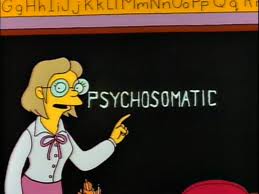
In 1991 Lyme disease was certainly in the headlines but I don't remember when the issue of chronic Lyme disease started to appear. Hard to believe it was 20 years ago but a show called the Simpsons was renewed for its second season and for episode 19 an uncredited Dustin Hoffman provided the voice of substitute teacher Mr Bergstrom who Lisa has a big time crush on. Of course setting this all up involved the temporary removal of regular teacher Miss Hoover.

At the start:

Miss Hoover: [shakily] Children, I won't be staying long.
                I just came from the doctor, and I have lyme disease.
                Principal Skinner will run the class until a substitute arrives.
   Ralph:       What's lyme disease?
   Pr. Skinner: I'll field that one.  [goes to blackboard]  Lyme disease
                is spread by small parasites called `ticks'.  [writes `TICKS'
                on blackboard]  When a diseased tick attaches itself to
                you, it begins sucking your blood...
   Miss Hoover: [not calmed] Oh...
   Pr. Skinner: Malignant spirochetes infect your bloodstream, eventually
                spreading to your spinal fluid and on into the brain.
   Miss Hoover: The brain!?  Oh, dear God...
   Class:       Wow 
 
and at the end: 
Miss Hoover:  You see class, my Lyme disease turned out to be psychosomatic.
Ralph Wiggum: Does that me you were crazy?
Janie         No, that means she was faking it. 
Miss Hoover:  No, actually, it was a little of both.  Sometimes, when a 
                 disease is in all the magazines and on all the news shows, it’s 
                 only natural that you think you have it.
 

Thursday, January 20, 2011

Real disease or medical myth?

In an era when most journalists simply re-write press releases (or simply cut and paste them) or report on a politicians latest tweet it is refreshing to find an article where a journalist appears to have actually done his homework and done some, gasp, journalism.

This article,  Chronic Lyme disease: A dubious diagnosis, was in the Herald-Review last month and is well worth a read. What do you think?


Lyme disease is real. The bacterial infection, chiefly transmitted by deer ticks, can cause rashes, swollen joints and inflamed nerves and usually is curable with a round of antibiotics.

But doctors around the country are telling patients with common medical problems such as back pain, poor concentration and fatigue that their ailments all stem from a chronic form of Lyme disease that can evade standard treatment and wreak havoc for years. To fight what they believe is a persistent infection, the doctors often order months or years of intravenous antibiotics, which can cost tens of thousands of dollars.

Strong evidence isn't on their side. But in a golden age of dubious medicine, that doesn't matter.

These days, advocates can raise big money to ``Unmask A Cure'' for a disease that already has a cure, and doctors disciplined by medical boards are held up as heroes. State legislatures around the country are passing laws to prevent medical boards from disciplining doctors who treat chronic Lyme with therapies that clinical trials have shown are dangerous and don't work.


Read the whole article.

Wednesday, January 19, 2011

Forest Fragmentation May Increase Lyme Disease Risk

Patchy woods, particularly those consisting of less than five acres, may have more Lyme disease carrying ticks, which could increase both risk and incidence of disease in these areas. This is particularly worrisome given that this fragmentation is common in cities & in suburbia. Researchers found that smaller forest fragments had more infected ticks, which could explain the increase of Lyme disease in the U.S. in recent years. These findings provide a way in which the risk of Lyme disease could be reduced by adjusting our land use practices by decreasing fragmentation of forests into small patches, particularly in the northeastern U.S. where the incidence is the highest.

Saturday, July 10, 2010

Another clue

A paper in the latest Journal of Vector Ecology is attracting some press and may provide an additional clue to the mysterious chronic Lyme disease. The paper:
Detection of Lyme disease spirochete, Borrelia burgdorferi sensu lato, including three novel genotypes in ticks (Acari: Ixodidae) collected from songbirds (Passeriformes) across Canada
is being used by one of the authors to explain why some patients test negative for Lyme disease but continue to show symptoms.

"In the ticks that we got from the West Coast, we found three new novel strains. This could be why Lyme disease patients are testing negative and they actually have one of these onboard and it's not showing up,"

However one of the coauthors disagrees:

Dr. Muhammad Morshed, a clinical professor in the department of pathology and laboratory medicine at the University of B. C, says Scott has reached the wrong conclusion from data he provided. Morshed's lab at UBC examined the tick-borne bacteria and identified the new strains, but says the genetic differences are not enough to throw off the current testing for Lyme disease.

So far the story has been picked up by the Vancouver Sun but I wouldn't be surprised if this one generates some more interest.

Thursday, July 8, 2010

Lyme disease: The great debate

An interesting news report on this controversial topic. What do you think of the reporting in the video clip versus the reporting in the article? How is the science portrayed?

The article contains some good links to further information.

Tuesday, July 6, 2010

Lyme - 2009 cases

Although the CDC doesn't have the 2009 Lyme disease data for the US yet (it's usually updated in August) various States are already reporting an increase in cases over those seen in 2008.

Sunday, January 24, 2010

Hitchhiking

I mentioned that ticks feed on birds and that birds can be hosts for Lyme disease. Although birds may not be either the preferred host for the ticks nor the most competent host for the ticks they may play a vital role in the story because they are so mobile.

Birds can both carry the ticks with them as they fly and also if the bird is infected with the Lyme bacteria in one location the bird's blood can spread the bacteria to the ticks in a new location

A team led by School of Public Health researcher Maria Diuk-Wasser analyzed studies on 71 bird species that host the black legged tick, the main carrier of Lyme disease. They found that 58.6 percent of the bird species can infect the tick with the bacterium that is responsible for Lyme disease. The literature review was published online in December in the journal Frontiers in Ecology and the Environment.

“Although it has been known for some time that birds play some role in Lyme disease epidemiology, this study integrates all the available information and points at particular bird species that may have a critical role in dispersing the Lyme agent,” Diuk-Wasser said.

Saturday, January 23, 2010

Under Our Skin again

Someone posted on this movie, Under Our Skin, last year when the movie was just released. It looks like it is getting another push for Oscar season. It's on the shortlist of 15 films for the Best Documentary Feature Oscar.
The topic of chronic long term lyme disease, or post lyme disease syndrome is one I didn't really have time to get into in class. It's an interesting topic.

A gripping tale of microbes, medicine & money UNDER OUR SKIN exposes the hidden story of Lyme disease, one of the most controversial and fastest growing epidemics of our time. Each year, thousands go undiagnosed or misdiagnosed, often told that their symptoms are "all in their head." Following the stories of patients and physicians fighting for their lives and livelihoods, the film brings into focus a haunting picture of the health care system and a medical establishment all too willing to put profits ahead of patients.

Thursday, January 21, 2010

Lyme Disease in Man's Best Friend

In response to Professor Latto’s post about Lyme disease vaccinations for dogs, I researched how Lyme disease differs in humans and dogs. I found that only ten percent of dogs become infected if ticks carrying B. burgdorferi bite them. In fact, if infected ticks are found and removed from dogs within 48 hours, the bacteria will not be transmitted from the tick to the dog. In the case that dogs are infected with Lyme disease, their symptoms are different from humans and take longer to appear. After they are bitten and infected, it can from 2 to 5 months for dogs to fall ill and they do not develop characteristic rashes like humans. Rather the typical symptoms of Lyme disease in dogs include high temperatures (103-105 degrees), joint and lymph node swelling, little appetite, and they often become lethargic. Lyme disease is usually easily and effectively treated with penicillin-based antibiotics. However, in some of the worst cases, where dogs kidneys become infected, Lyme disease is very difficult to treat and can be lethal. Fortunately though, tick controls and vaccines are available to help prevent Lyme disease in canines.

For further information about Lyme disease in dogs as well as other animals, see http://www.peteducation.com/article.cfm?c=2+1556&aid=458

Chronic Lyme Disease

They want ta' legislate the moon
They want ta' legislate the womb
They wanna legislate all the things they hate
They want ta' legislate this tune

Hmm, Whatever happened to Grant Lee Buffalo? Ahh, they broke up in 1999 (thank you Wikipedia) - that explains why they've been quiet.

Anyhow, that brings us to today's topic - should we legislate what are essentially medical issue? Connecticut thinks so. In July last year House Bill 6200 passed through the Connecticut House of Representatives by unanimous approval (137 for, 0 against). What does this bill do? It protect Connecticut licensed Lyme treating physicians from prosecution by the State of Connecticut Medical Examining Board solely on the basis of a clinical diagnosis and /or for treatment of long-term Lyme disease - thus allowing them to provide long term antibiotic treatment for people with chronic lyme disease (and also sufferers from Post-Lyme disease syndrome).

Sounds reasonable? Except that in patients who have non-specific symptoms after being treated for Lyme disease, and no evidence of active infection (so called Post-Lyme disease syndrome or PLDS), studies have shown that more antibiotic therapy is not helpful and can be dangerous.
Read this report from the National Institute of Allergy and Infectious Disease (part of NIH). Read this letter regarding the bill sent by the Infectious Disease society of America.

I write on behalf of the Infectious Diseases Society of America (IDSA) to urge you to oppose the enactment of Connecticut House Bill No. 5625, which sanctions the use of long-term antibiotic therapy to treat Lyme disease and would protect physicians, who administer such therapies, from disciplinary action. In urging your opposition to this legislation, our primary concern is to ensure the best quality in patient care and to protect the public’s health and safety. To this end, we believe it is critically important that you be fully apprised of the widespread consensus within the medical and scientific community about the appropriate treatment of Lyme disease, as well as the medical community’s concerns about unproven, potentially harmful treatments for so called “chronic” Lyme disease that are advocated by a small group of physicians.
.
.
Carefully designed and conducted studies of Lyme disease treatments have failed to demonstrate benefit from prolonged antibiotic therapy. Rather, these studies have demonstrated that there is no difference in the measured improvement between patients receiving placebo and patients treated with antibiotics.

Furthermore, the scientific evidence that long-term antibiotic therapy may be dangerous, leading to potentially fatal infections in the bloodstream as a result of intravenous treatment. Far from improving the patient’s quality of life, prolonged antibiotic therapy may actually increase the patient’s suffering. Also, although the bacteria that causes Lyme disease does not acquire resistance to antibiotics, long-term antibiotic exposure can lead to drug-resistance among other microorganisms, creating “superbugs” that cannot be treated with currently available drugs.

I think we can expect to see more bills like this. It is the government's job to protect us from those who offer false hope and possibly dangerous 'cures' not to enable them.